01A fine, and a grudge worth seven minutes
According to Ben Sharpsteen, who animated on it, Traffic Troubles began with Walt Disney being fined by a traffic cop. The evidence is in the first minute. Mickey's cab is stalled under the weight of an enormous pig, traffic backs up, and a cat policeman leans in to browbeat him for blocking the street. The cop is drawn with real contempt, and Mickey's flustered attempt to drive off is the reaction of a man who has just been through it.
It is one of the few early Mickeys with a traceable origin in something that happened to somebody at the studio, and it shows in the specificity. Most 1930 shorts start from a setting: a barnyard, a jail, a jungle. This one starts from an irritation, and irritation is a better engine for comedy than scenery.
02The cab has opinions
The taxi is anthropomorphised from the first shot, and the film's best idea is to treat it as a second character rather than a prop. It groans under the pig. It bounces on rough road until the pig is thrown clear. Its tire blows out, and here the studio's habit of pushing every gag past its natural limit is on record: animator David Hand recalled Walt demanding more exaggeration in the tire-blowing sequence, sending it back until the blowout was as big as the drawing would bear.
Then Peg-Leg Pete arrives on a tricycle, hawking Dr. Pep's Snake Oil, and volunteers to fill the flat with his product. What follows is the short's centrepiece. The car comes alive, takes off without Mickey, and runs a course that ends in a wreck through a barnyard. The animators give the machine a personality distinct from any of the animals in the film, and once it is loose the humans, or mice, become bystanders in their own picture.
The joke is not that the tire blows. The joke is how far Walt made them push it.
03Three fares, one shift
The structure is a cabbie's day, and each pickup tests a different thing.
| Passenger | What happens | What it is for |
|---|---|---|
| An enormous pig | Flattens the cab's suspension, brings on the traffic cop, is bounced out on rough road | Sets up the cop, the studio's revenge on Walt's ticket |
| Minnie Mouse | Needs to get to her music lesson; the ride ends with a flat tire | Gives Mickey a reason to keep going when the cab quits |
| Peg-Leg Pete (not a fare) | Arrives selling Dr. Pep's Snake Oil, fills the tire with it | Triggers the runaway car and the barnyard finale |
This is a tighter build than it looks. The pig is not a random gag but the setup for the cop; the cop is the setup for Mickey's exasperation; the flat is the setup for Pete; Pete is the setup for the finale. Each block loads the next. Compare it with The Castaway, released ten days later, where the encounters could be shuffled into any order without loss, and the difference between a written short and an assembled one is obvious.
That kind of build, where each beat only works because of the one before it, is the same test a personal essay or an application narrative has to pass: cut a paragraph out and see whether the next one still makes sense. Structora's outline builder is built around that same check, forcing a draft into a sequence where each point loads the next instead of just sitting next to it.
04Pete as a salesman
Pete is usually the heavy: the jailer, the pirate, the kidnapper. Here he is a patent-medicine man on a tricycle, and the change of register suits him. He is not menacing Mickey; he is fleecing him, cheerfully, with a bottle of something that turns out to be far more potent than advertised. Walt Disney voiced both Mickey and Pete, which means the argument over the tire is one man talking to himself in two registers. Marcellite Garner voiced Minnie, whose job is mostly to be late for her lesson and to look alarmed.
The snake-oil premise also dates the film in a useful way. Travelling medicine shows were still a living memory in 1931, and the joke of a tonic so strong it animates a car would have landed with people who had watched a real pitchman work a crowd. It is the same instinct that put a topical Al Jolson pun on The Jazz Fool: the studio assumed its audience knew the world outside the theatre.
05The Roxy, and the funny pages first
Two facts about its release are worth recording. Traffic Troubles was the first Disney cartoon to be featured at the Roxy Theatre in New York, the 5,920-seat picture palace off Times Square that had opened in 1927. Getting a Mickey short onto that screen was a statement about where the series stood in the trade by early 1931, and Columbia, which had taken over distribution, will have been glad of it.
The other fact runs the other way. Floyd Gottfredson used the short as the basis for a week-long story in the Mickey Mouse newspaper strip, published from January 12 to 17, 1931, two months before the film reached theatres on March 17. In other words, readers of the strip met the taxi before any cinema audience did. The cartoon had been in production long enough for its story to be handed across to the strip and drawn, lettered and syndicated ahead of its own release. It is a small window into how far in advance the studio's material travelled.
06The best of 1931?
One historian calls Traffic Troubles the best Mickey Mouse film of 1931 and the character's first really great cartoon since Steamboat Willie; another simply found it the funniest of the shorts to that point. I would not go as far as the first claim, because The Fire Fighters and Pioneer Days had already shown the studio could tell a story and stage a set piece. But as a comedy that escalates rather than repeats, where each gag is bigger because of the one before it, it has no rival among the Mickeys released up to that spring.
It was the twenty-sixth Mickey short and the second of 1931, following The Birthday Party and preceding The Castaway. Burt Gillett directed; Walt Disney produced. It ran 7:33, later turned up on The Mickey Mouse Club and Mickey's Mouse Tracks, and reached DVD on December 7, 2004 on the second black-and-white Mickey volume of the Walt Disney Treasures line. Of the four 1930 and 1931 shorts reviewed in this batch, it is the one to start with.
Questions people ask
- When was Traffic Troubles released?
- It was released on March 17, 1931 by Columbia Pictures. It was the twenty-sixth Mickey Mouse short produced and the second of 1931, between The Birthday Party and The Castaway.
- Who directed Traffic Troubles?
- Burt Gillett directed and Walt Disney produced. Disney voiced both Mickey and Peg-Leg Pete, and Marcellite Garner voiced Minnie.
- What inspired Traffic Troubles?
- Animator Ben Sharpsteen said the short grew out of an incident in which Walt Disney was fined by a traffic cop. A cat traffic policeman who berates Mickey appears in the opening scene.
- Was Traffic Troubles adapted into a comic strip?
- Yes. Floyd Gottfredson based a week-long Mickey Mouse newspaper strip story on it, published January 12 to 17, 1931, two months before the film's theatrical release.
More Mickey Mouse shorts
All shorts →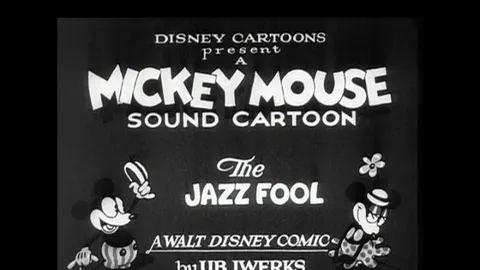
Sources
Entered September 7, 2026. How this page is sourced: see the sources and method.